How Germany Plays. Part 2: Adventure Playgrounds.

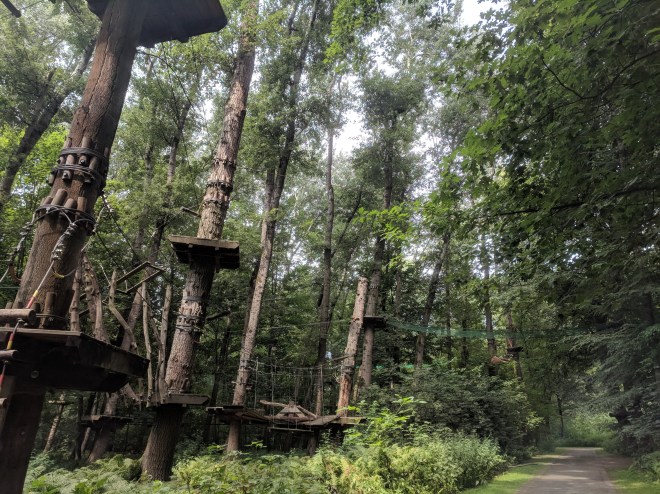
Germany has a lot of adventure playgrounds, called alternatively Abenteurspielplatz or Bauspielplatz. I was really hoping to get to one while we were there, and I got my first chance when we were spending a day in Dortmund. We spend the first part of that day at a “Kletterpark” (climbing park), where we were super lucky because there was nobody else there. We were told that usually it’s very busy but because it was the first day of the summer break in Germany, people were packing to go on vacation or just enjoying the first day of no school. I had never heard of these parks, so when I first saw it, I wasn’t sure what it was. It looked like a deserted tree town:
img_20190712_125901

I don’t really know how to take a good picture of a Kletterpark, but if you google it, you will find plenty great ones. While it wasn’t exactly a playground, and we had to pay to use it, I’ve decided to include it here because it’s another example of how the Germans love to do risky and adventurous stuff outdoors. These parks are usually for people ages 5 and up, and there is a variety of routes for different skills. My kids really loved climbing there, especially going from a tree to a tree on a zipline. I tried climbing in a Kletterpark in Berlin and found out it was freaking hard although you do learn pretty quickly. And yes, the ziplines are the best part!


After some climbing and some ice-creams, we headed to an adventure playground.  On the way there, we discovered a whole village of gardens. It turned out that, just like in Russia, where almost everybody has a “dacha”, lots of Germans have plots of land where they garden and just hang out in the summer.  These are so ubiquitous even within bigger cities that people can often simply walk there from wherever they live. From what I understand, these gardens can be quite cheap and pretty much anyone can have one. Once, looking through a window of an S-Bahn train, I saw a big garden “village” right in Berlin! I wish I had a picture but I don’t. Sorry!

Anyway, back to the adventure playground. The one we visited is called Abenteurspielplatz Rahm, after a neighborhood in Dortmund. The playgrounds has been around since the 70s. It is very spacious: somewhere on line it says that it’s 10,000 square meters. It is for kids 0-16, with the rule that kids younger than 6 have to be accompanied by their parents.

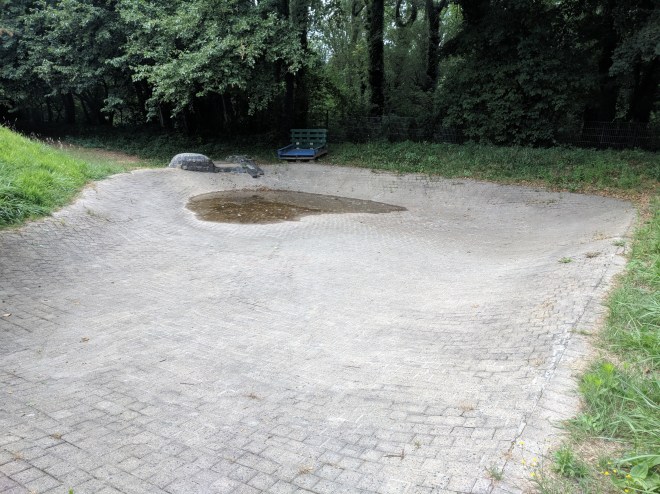
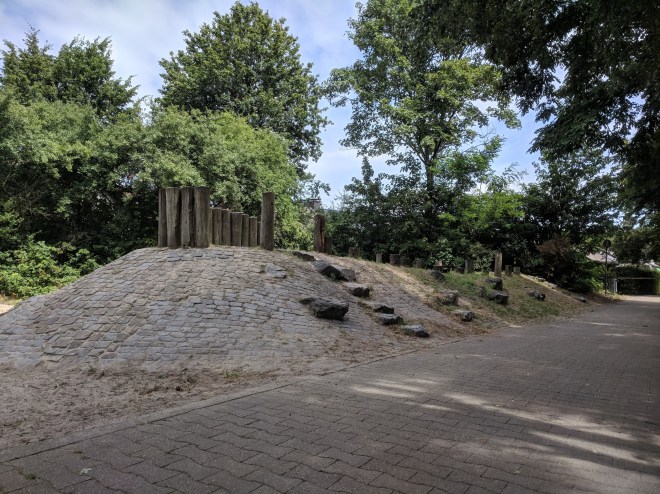
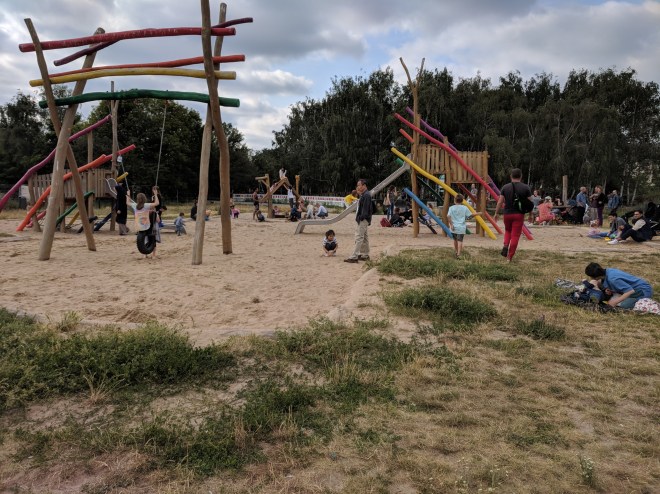
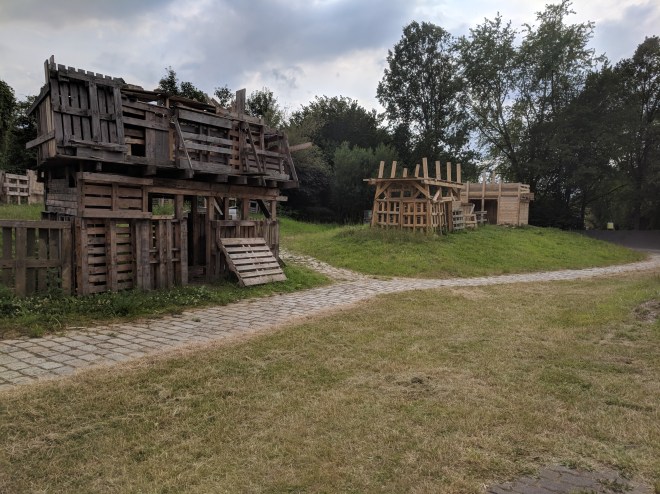
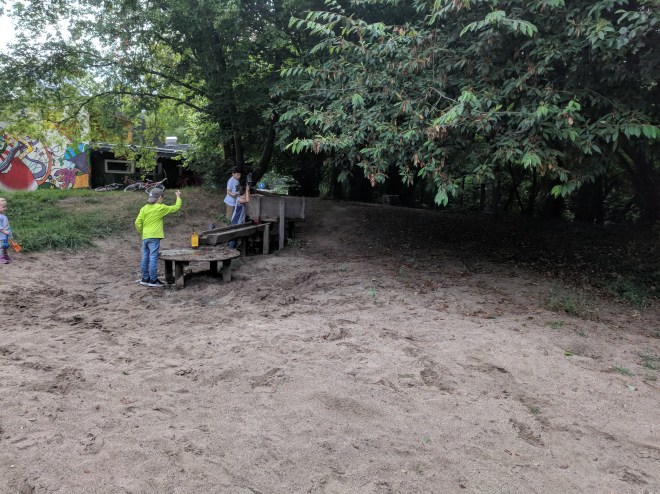
At the playground, there is an area with “forts” that kids build themselves mostly out of pallets, a communal area with the fire pit in the middle, an area for water and sand play, a football field. Because I was asked not to take pictures with children up close, I don’t have many images. Just keep in mind that while my photos look like the place was deserted, in fact it was teeming with kids.
img_20190712_162729

img_20190712_162322
water and mud
img_20190712_162244
soccer field


soccer

img_20190712_162300
splash area


The playground has a shed for tools and play equipment including various personal transportation means (carts, roller blades, bikes).


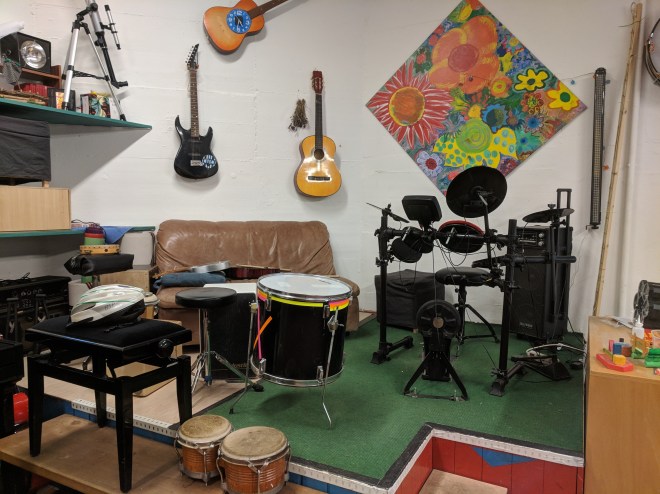
It also has a field house with a “music room” (imagine a cozy room where a teenage band can rehearse), a multipurpose shop for crafting of all sorts, including pottery, and some other rooms, used for various purposes. I was amazed at all this space–indoor and outdoor–that the neighborhood kids got to have for themselves.
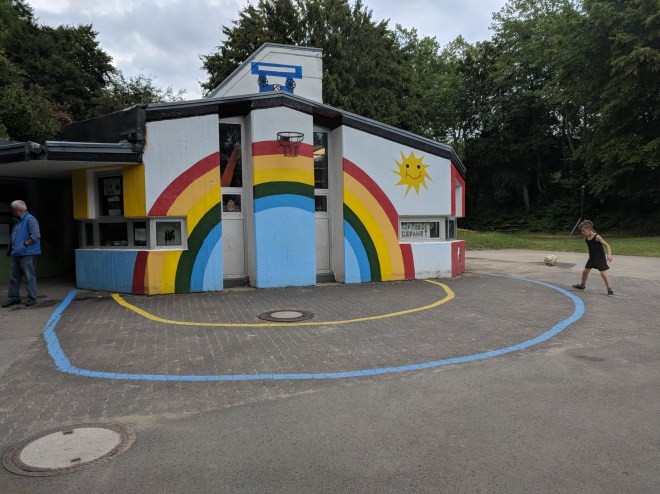
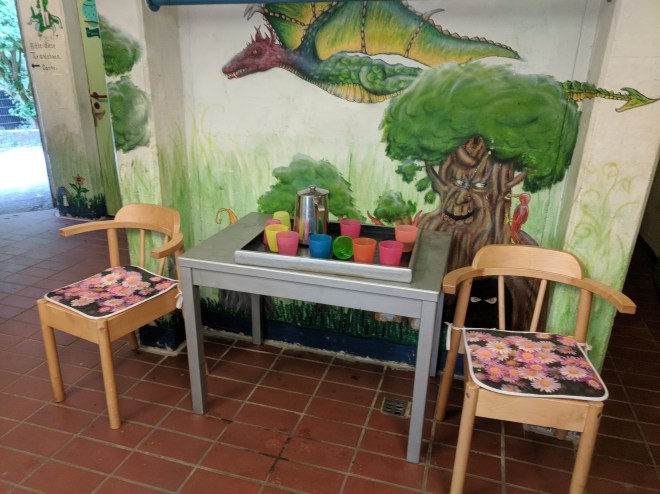
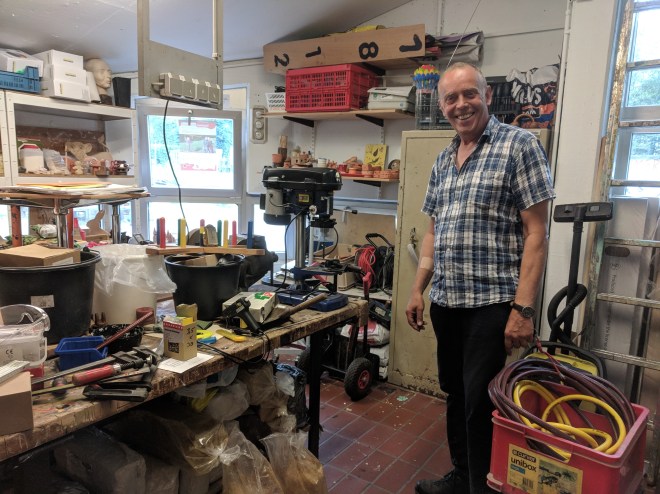
img_20190712_172509img_20190712_173001img_20190712_173020img_20190712_173225

The guy you see on one of the pics above is Klemens Möller, the head playworker, or pedagogue, as they are called in Germany. There are three pedagogues and one caretaker staffing the playground, and I believe all of them have been there for a while, with Klemens, perhaps, the longest: 30 years. Check out this awesome looking crew:
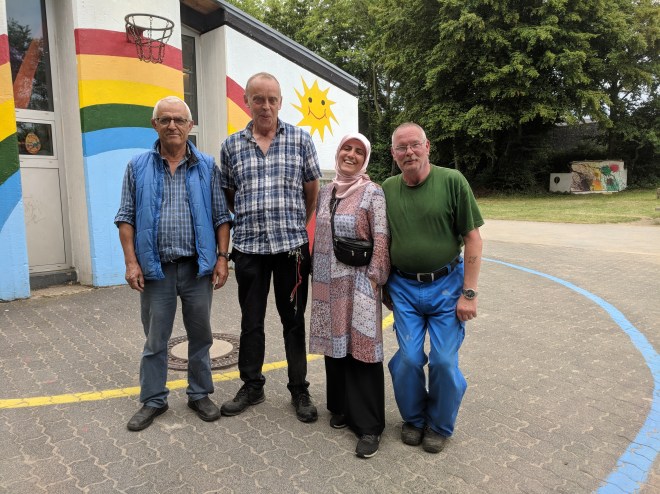
img_20190712_174428

Klemens spoke decent English and kindly agreed to chat with me. Here’re some quotes from him:

  • Kids are very busy these days, but here they can just be and move with their own rhythm.
  • Tools are great because kids learn to decide whether they want or don’t want to take risk. After they turn 6, they can come to the playground on their own and already then they can start making these decisions. Even if they hurt themselves, they have learned a lot.
  • Of course, we have conflicts on the playground. We try to give the kids a chance to resolve those on their own. We interfere only with ongoing conflicts that don’t seem to get resolved.


As Klemens and I were sitting on the bench at the playground entrance, kids and adults passed by and exchanged words in German. Although I didn’t understand most,  it was clear that Klemens was their good friend. When an ice cream truck stopped by, some kids wanted to show Klemens what kind they got. Some kids just came up to us, and listened and smiled. They looked so relaxed and comfortable there.

When the playgrounds was closing, and kids and families were walking out, Klemens reminded them that tomorrow was “Kindertheater”. The day I was there, they had a community potluck. Several families with younger kids were sitting around a fire pit and at picnic tables.  The place truly felt like a community and family hub with warm and welcoming staff.  Naturally, all of that was free of charge.

Klemens told me that some time in the past (I didn’t quite catch when) the city decided to shut down the playground.  Guess what? The community took to the streets and got the playground to stay.

Abenteurspielplatz Rahm and the Youth Center that sits right next to it have a joint webpage: https://www.dortmund.de/de/leben_in_dortmund/familie_und_soziales/jugendamt/freizeit/jugendfreizeitstaetten/huckarde_freizeiteinrichtungen/JFS_Rahm.html

Take a close look at this amazing statement of purpose (translated by Google) taken from the page. I highlighted my favorite areas.

  • With us children find free spaces in which they develop their personal skills and find solutions on their own. Self-determination, the feeling for others, and last but not least, a distinctive understanding of democracy train others to participate in the decision-making process. Adolescents can test their behavior in search of zest for life, social assertiveness in the group and conscious participation in adult decisions. In the often difficult finding your own personality, we are a reliable companion.

Amen!

This is the end of this part. The next and last part will be on Spielwagen in Berlin.
 

How Germany plays. Part 1: Regular Playgrounds.

I had heard of Germany’s playfulness from various sources, so I kind of had an idea before I and my family went there this past July. When we got there, some things were as I expected and some were surprises and discoveries. So, here’s my scoop.

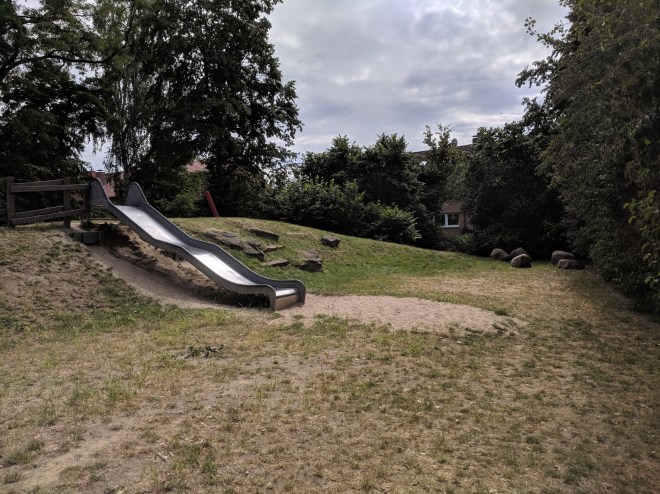
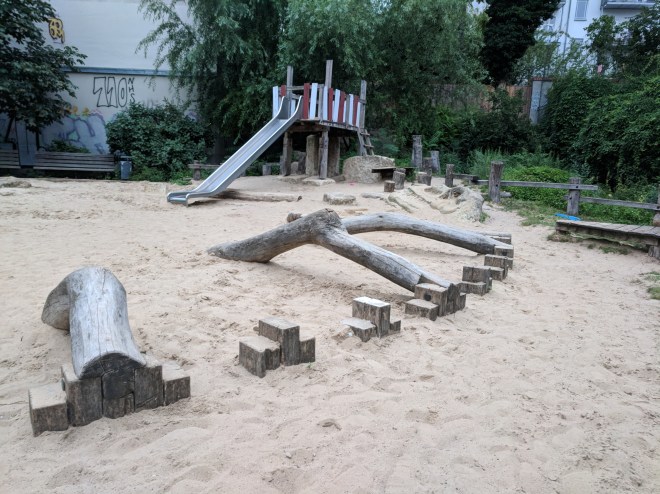
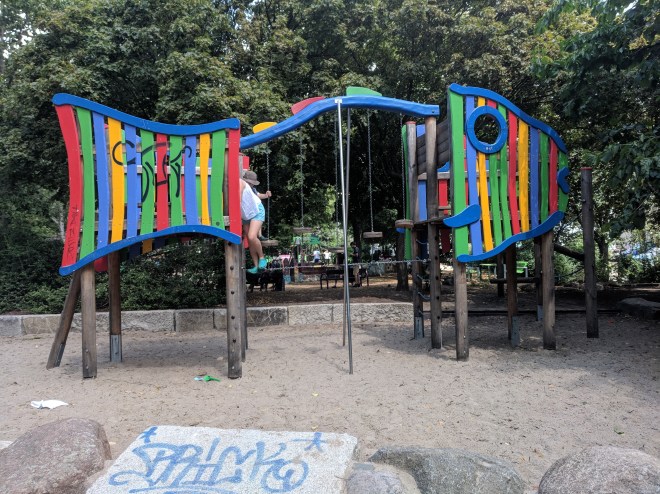
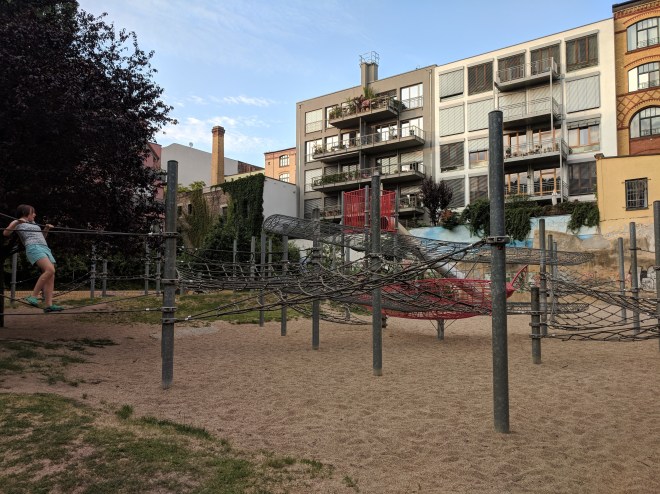
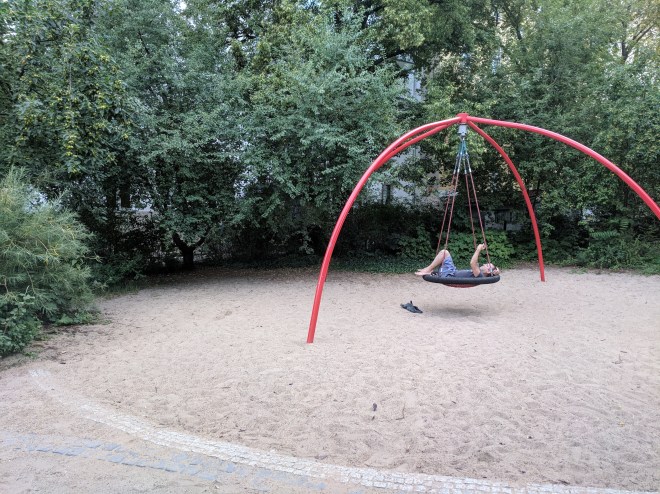
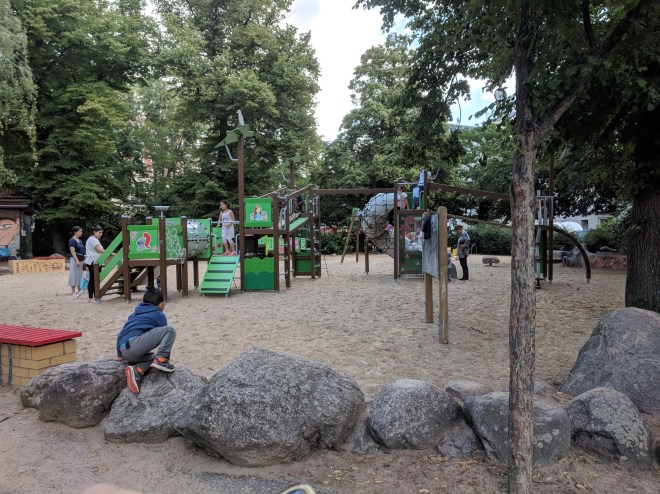
Expected: all the playgrounds had a variety of natural elements: rock, sand, wood, plants. The ground was always covered with sand, mostly the rough kind, but some playgrounds also had the fine kind that was really good for building.

img_20190710_151629-1

img_20190710_132444-1

img_20190710_151700-1
check out the circle of rocks in the back: so simple yet can be played with in so many ways

img_20190715_205714-1


img_20190721_131656

img_20190714_175323

img_20190717_200632

img_20190717_201800

img_20190721_131803


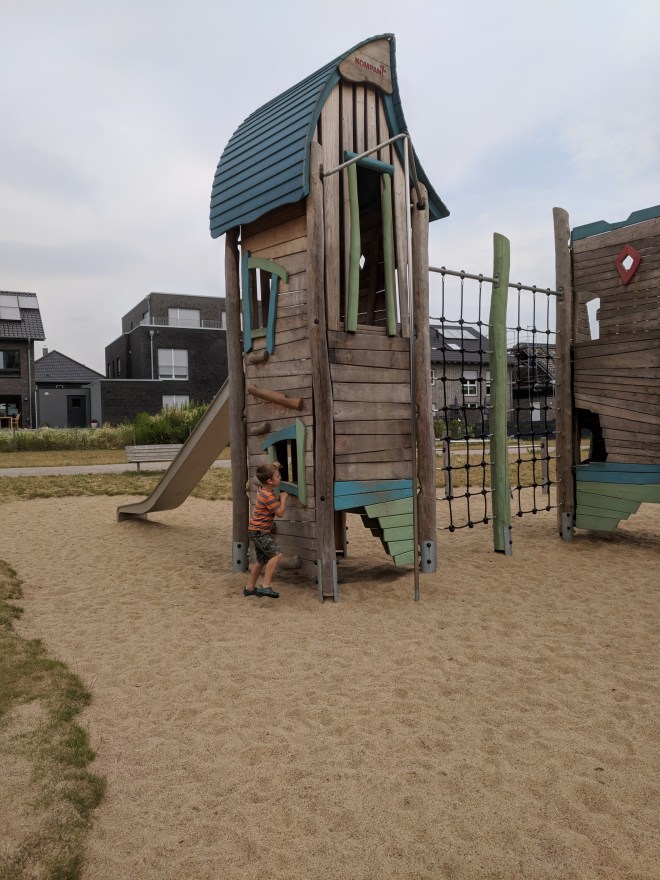
Surprise: some German playgrounds are made by the same company as some playgrounds in the Chicago area– the Danish manufacturer KOMPAN (https://www.pgpedia.com/k/kompan). I think Vera McGowan park on Hinman, possibly the newer part of Baker Park, and some elements of Eiden Park in Evanston are made by KOMPAN. However, KOMPAN playgrounds in Germany are definitely taller and just kind of more interesting and challenging than the ones here. Here’s one example from a small city of Waltrop near Dortmund. Check out the height:

img_20190711_151228

img_20190711_151207


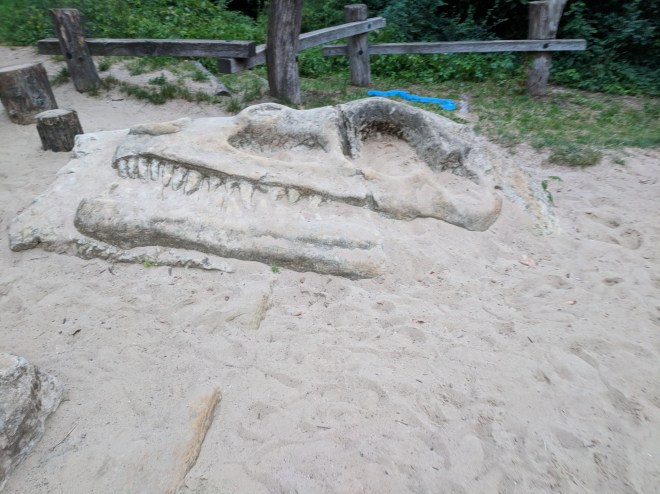
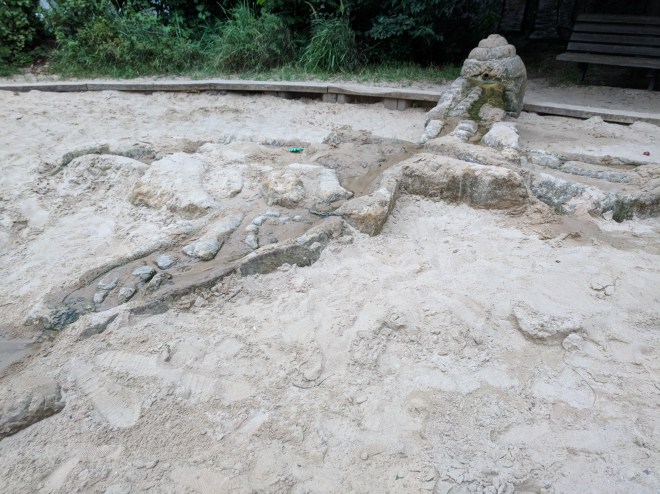
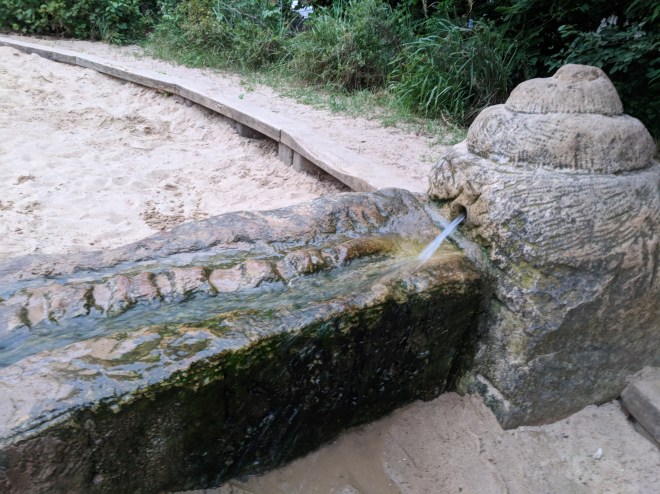
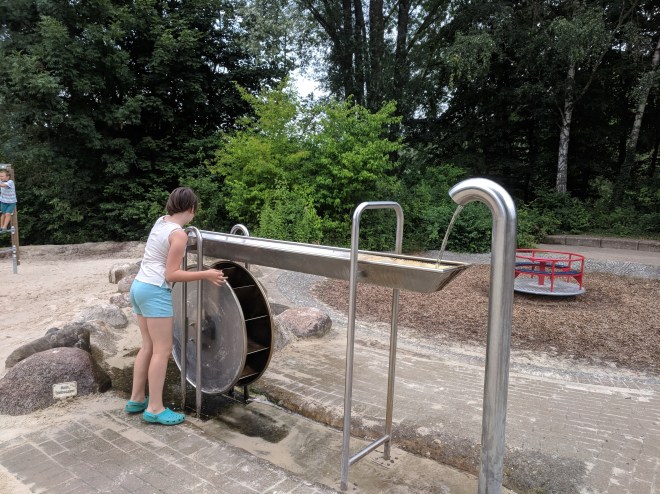
Surprise: most if not all of the playgrounds had a water element. Maybe the coolest one was in a small nook of a playground in Berlin whose theme was mmmm…. paleontology, I guess. Its main play elements were sand and “dinosaur fossils” that were half buried in the sand. And then there was this little water pump, which squirted water over something that looked either like another fossil half buried in the sand or like mini remains of an ancient city. Here’re some pictures:

img_20190715_205740

img_20190715_205730


img_20190715_211456

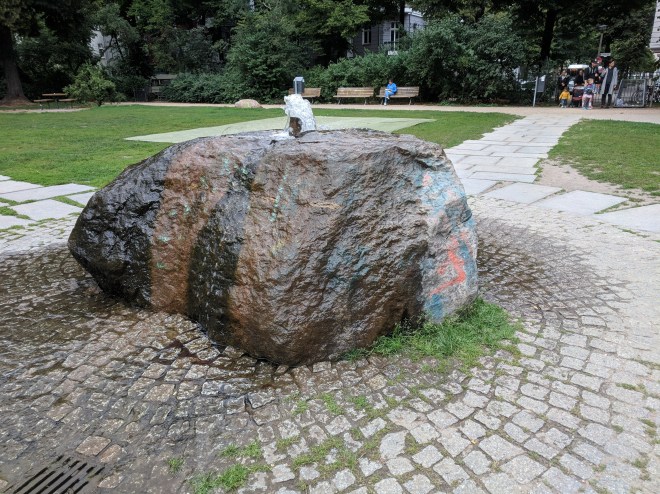
Some more water elements from various parks:

img_20190716_154323-1

img_20190712_114651-3


Surprise: many playgrounds had ziplines that went very fast: my kids discovered that they had to hold on pretty tight not to fly off at the very end, when the top of the zipline made a stop and the bottom made a wide and sudden swing first in the direction of the movement and then backwards. It wasn’t for the faint of heart. 🙂 Here’s a tiny video to give you an idea: https://www.youtube.com/watch?v=DNR1_bJ81_g

We also saw a few playgrounds that had ground-level trampolines–something I have never see in the US. Those were seriously jumpy.

Another discovery I made was that many playgrounds were surrounded by pretty thick bushes ( as you can see on some pictures above), which were clearly used for hiding and for secret “homes”. Many of those plants were fruit trees and bushes, primarily apple and plum trees. Why don’t we have more fruit plans in the streets? I have a feeling that here in Evanston such thick plantings around playgrounds aren’t desirable because, “well, who knows what kids will do in those bushes.” I remember sitting at a community meeting a few years ago. The meeting was devoted to the future of Penny Park  and a city official argued that the poor visibility of the playground structure was a serious liability. One point they made was that teenagers used the park for their “unspeakable” purposes because its construction is not see-through. I thought it was a ridiculous argument, coz life happens, you know, and really, should be happening, and not necessarily always under the watchful eye of whoever. In any case, the Germans seem to be fine with their kids hiding in the bushes and doing their secret stuff.

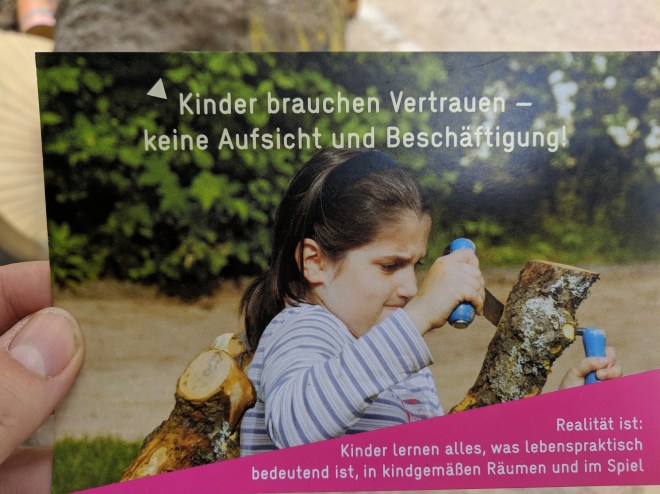
As I’m writing this, I’m reminded of a postcard I picked up at a park during a Spielwagen session (see about Spielwagen in a later post). Translated into English, the postcard says: “Children need trust–not supervision and employment! Reality is that children learn everything that is meaningful in practical life in child-friendly spaces and at play”. WOAH. I don’t know how close this is to the policies of Berlin government when it comes to children, but I saw a lot of trust in the design of the city’s parks and playgrounds.

img_20190716_155419


Special little chapter: Leisepark, Berlin

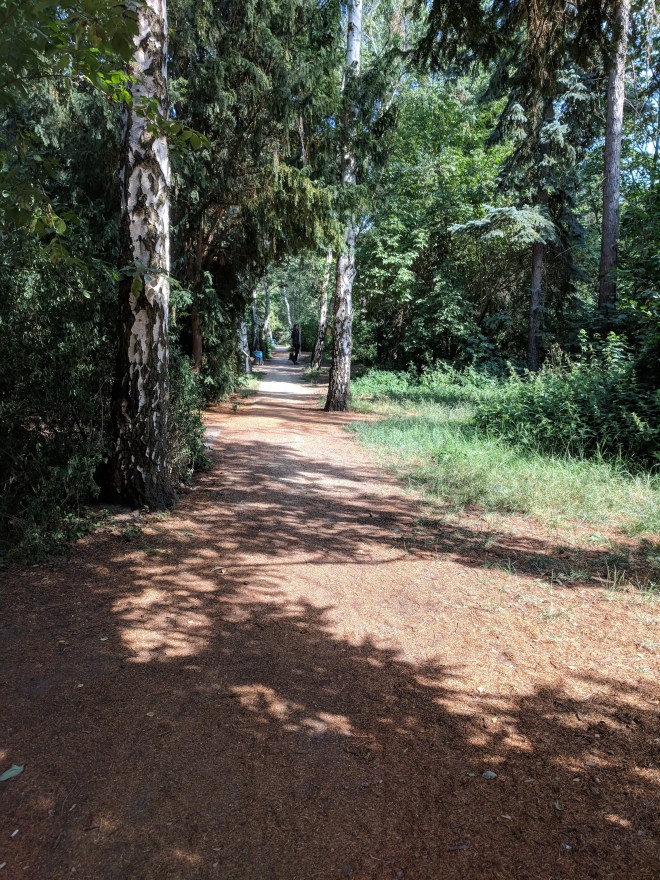
I don’t know if Leisepark belongs to a common kind of German parks, but I found it very special and I didn’t see another one like that anywhere. Its name translates as Quiet Park, but I keep thinking of it as Lazy Park, because it makes you relax instantly. One way to get there is to simply turn into a gate from a regular looking Berlin street, and hop-la! you’re in a different world.

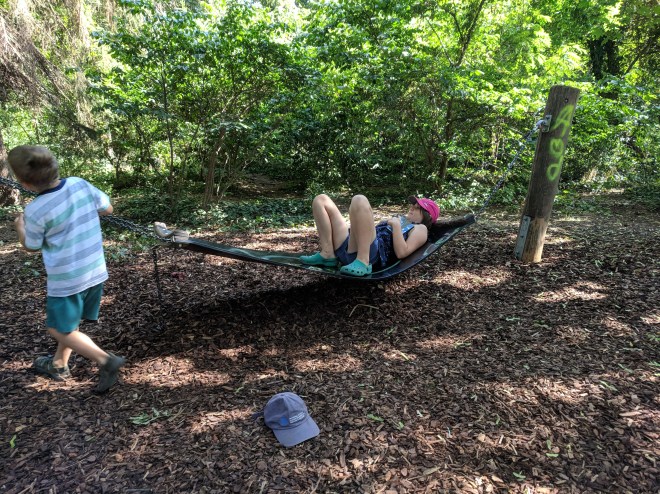
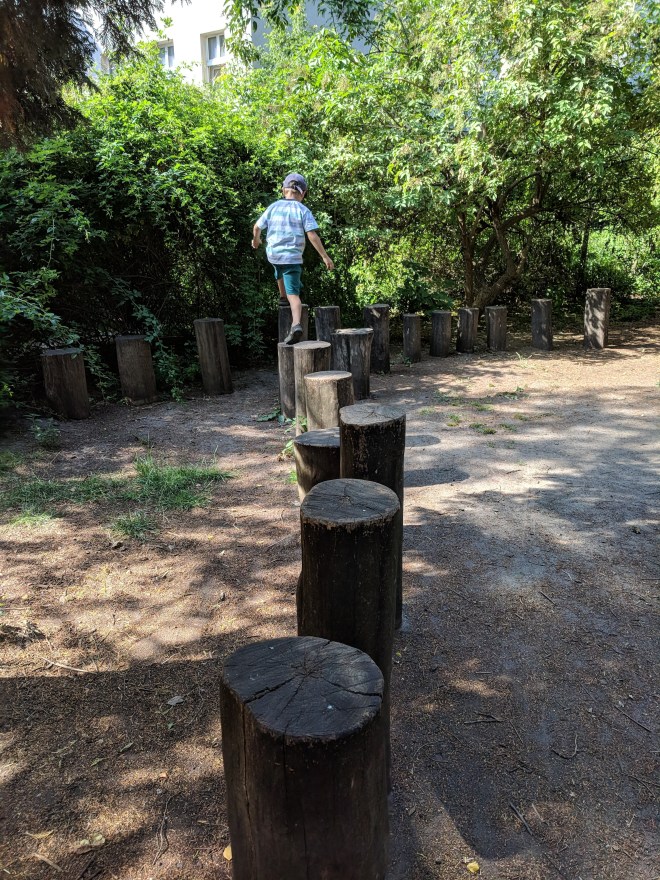
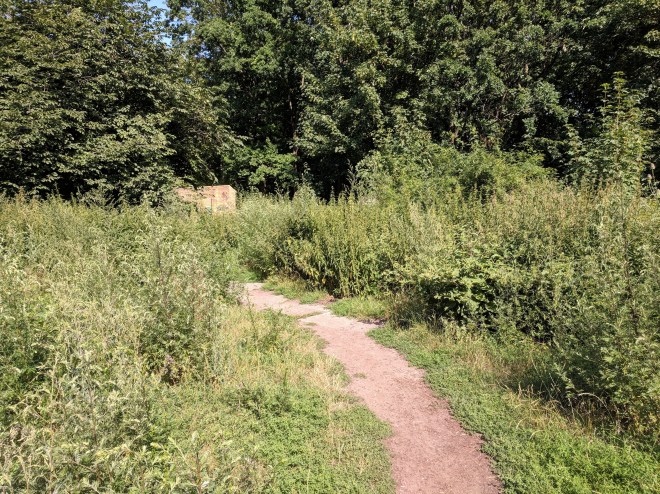
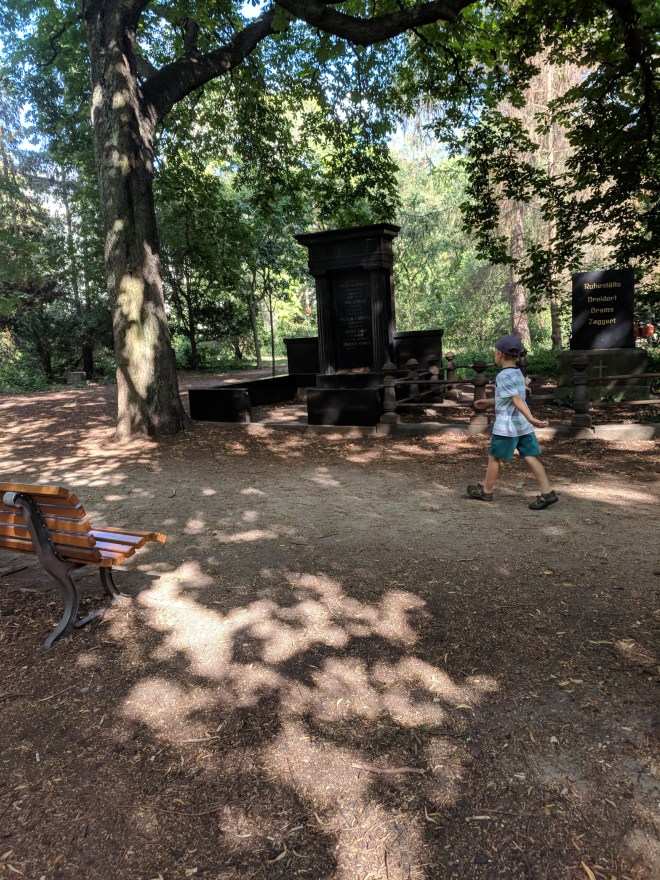
It’s a little wood in the middle of an apartment block, but you can’t see any buildings from most of the park. The wood is criss-crossed by narrow trails, and as you walk them, you come upon benches, wooden stumps arranged into simple but varied play structures, wide hammocks in shady nooks, and–here was a big surprise–tombstones.

img_20190717_162248.jpg


img_20190717_162340


img_20190717_162255img_20190717_161821-1

img_20190717_161657
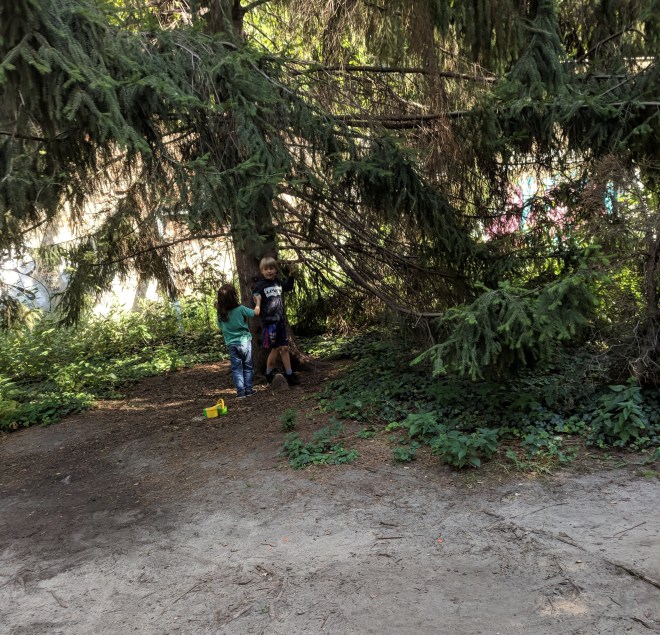
kids climbing a tall spruce while their parents hang out n hammocks

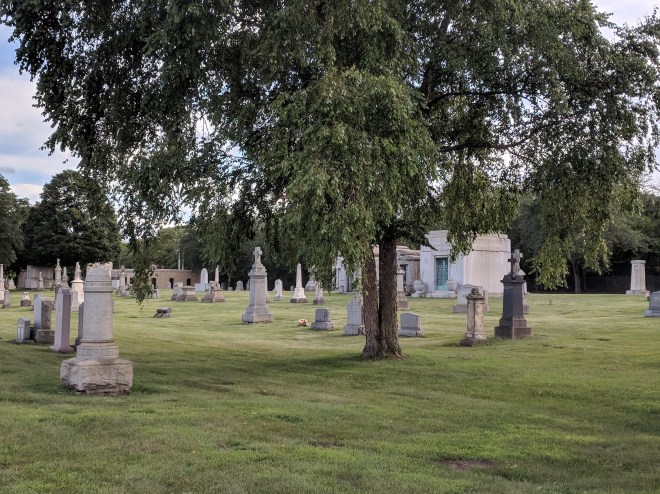
The park neighbors and kind of blends with a cemetery. I was a bit disoriented at first. Where are we? In Evanston, we live by a big cemetery, and have gone through it with kids, playing “ghost tag” along the way. I don’t think it’s common practice though, and I suspect we may get disapproving glances if we do it another time when people are there. Here’s a picture of a cemetery by our house:

img_20190818_174952


In Russia, where I come from, cemeteries are definitely solemn places, places of mourning. People speak in low voices and move carefully there.  Moreover, Russian cemeteries are often crowded, and there’s often very little space to walk, let alone run. Here’s a picture of a typical one:

Военное кладбище Минска


So I was amazed that in Leisepark, play pretty much in the cemetery was actually encouraged. Take a look at these tombstones sitting in the middle of an area that could be used in many ways, including play. I wonder if kids ever climb them. If I ever have a tombstone, that’s what I want: kids climbing all over it and jumping off of it.

img_20190717_164405


THE END. See post #2 about adventure playgrounds and #3 about Spielwagen.