I had heard of Germany’s playfulness from various sources, so I kind of had an idea before I and my family went there this past July. When we got there, some things were as I expected and some were surprises and discoveries. So, here’s my scoop.
Expected: all the playgrounds had a variety of natural elements: rock, sand, wood, plants. The ground was always covered with sand, mostly the rough kind, but some playgrounds also had the fine kind that was really good for building.
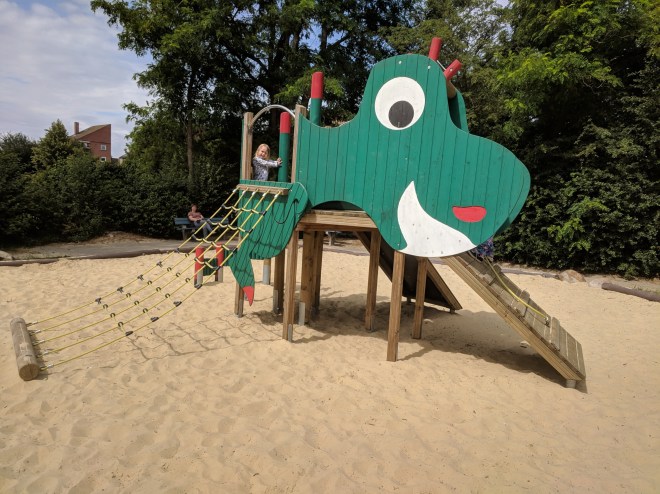
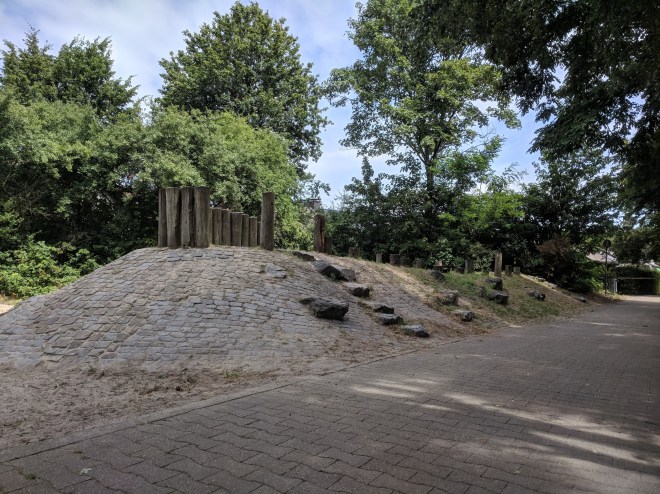
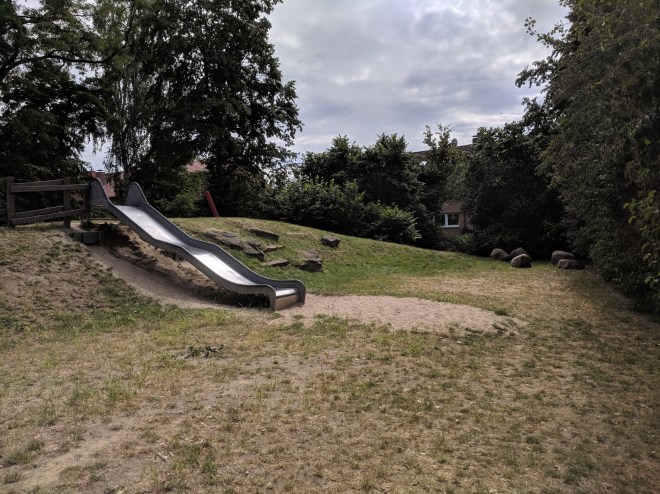
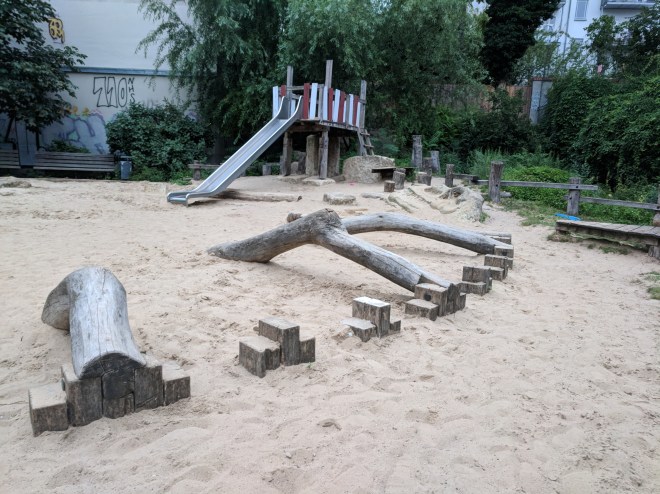
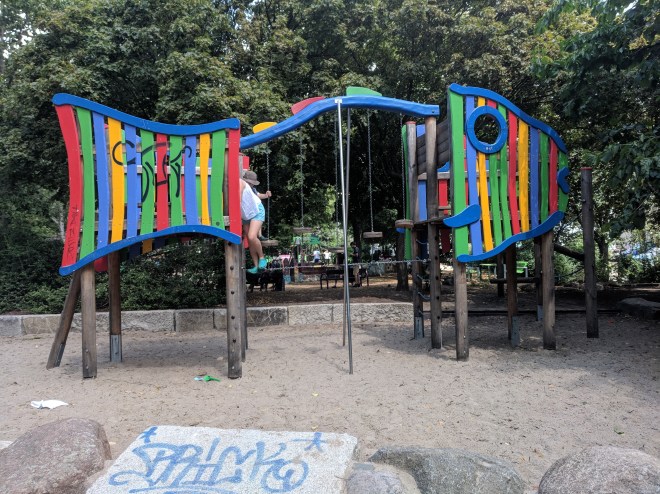
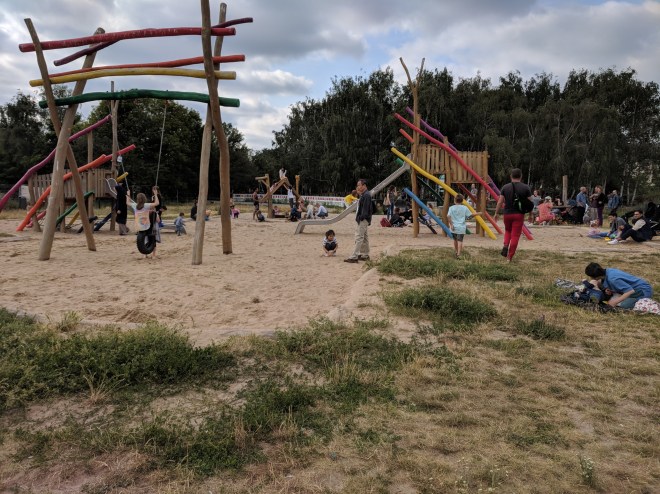
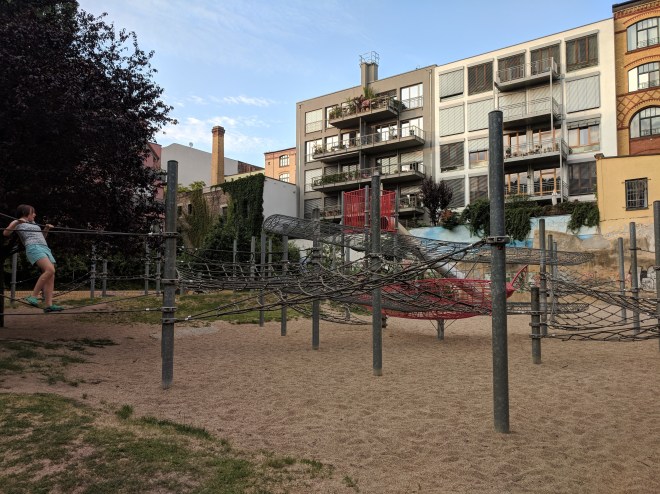
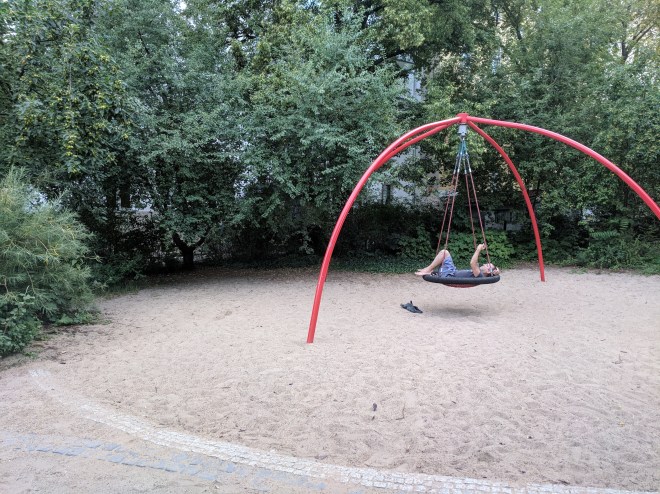
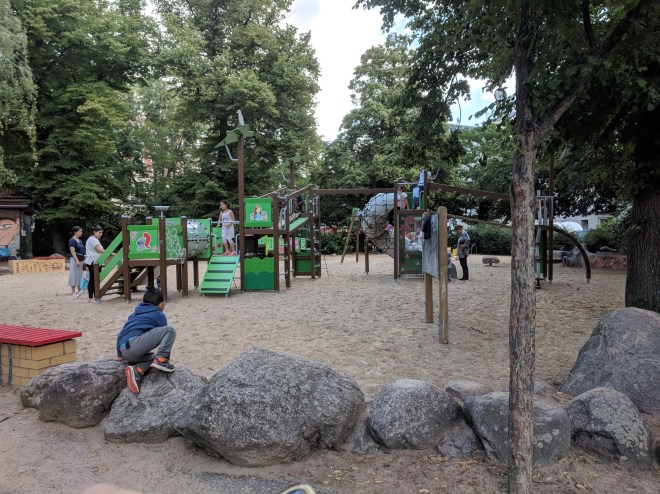
Surprise: some German playgrounds are made by the same company as some playgrounds in the Chicago area– the Danish manufacturer KOMPAN (https://www.pgpedia.com/k/kompan). I think Vera McGowan park on Hinman, possibly the newer part of Baker Park, and some elements of Eiden Park in Evanston are made by KOMPAN. However, KOMPAN playgrounds in Germany are definitely taller and just kind of more interesting and challenging than the ones here. Here’s one example from a small city of Waltrop near Dortmund. Check out the height:
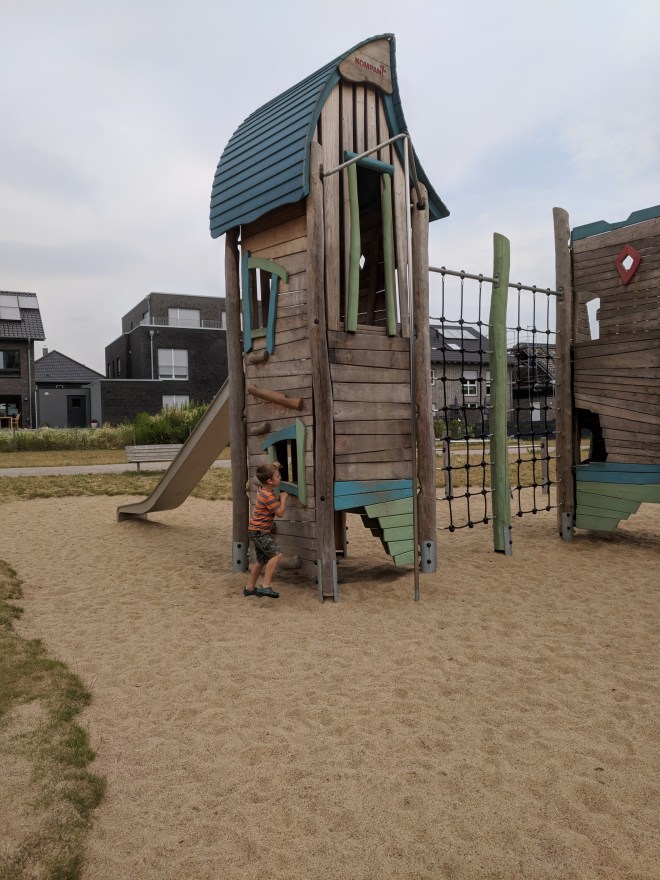

Surprise: most if not all of the playgrounds had a water element. Maybe the coolest one was in a small nook of a playground in Berlin whose theme was mmmm…. paleontology, I guess. Its main play elements were sand and “dinosaur fossils” that were half buried in the sand. And then there was this little water pump, which squirted water over something that looked either like another fossil half buried in the sand or like mini remains of an ancient city. Here’re some pictures:
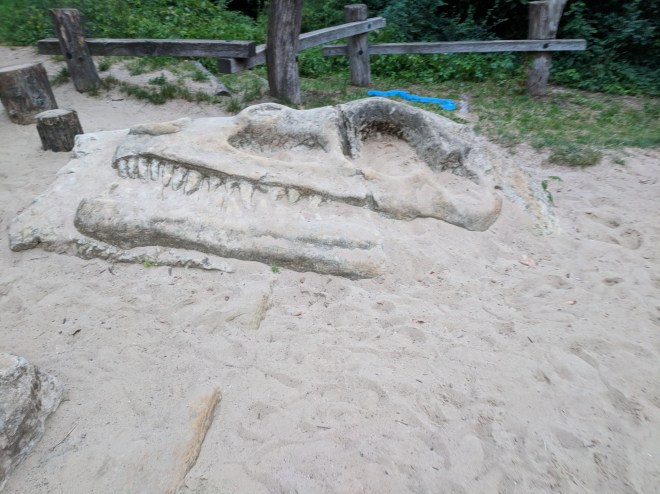
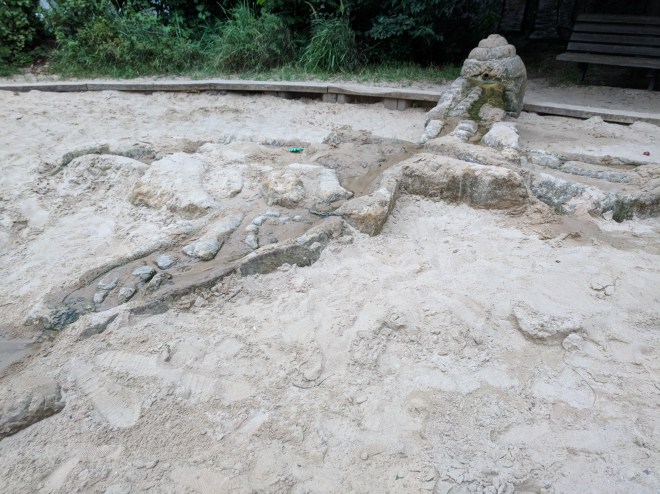
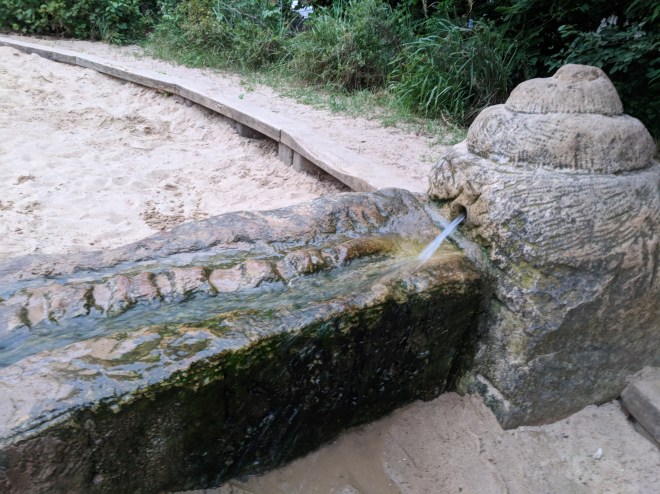
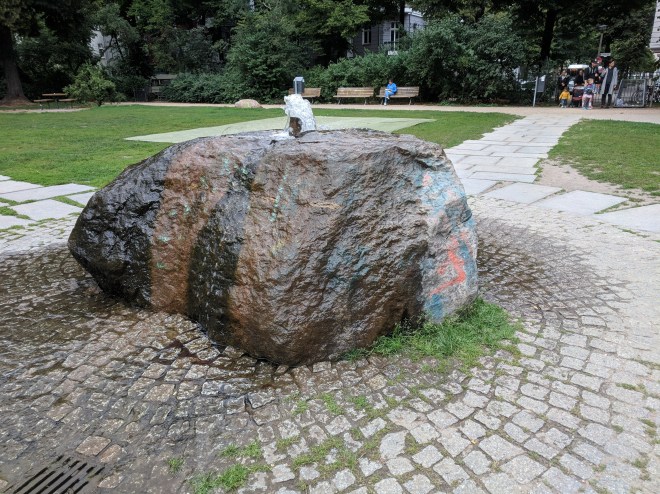
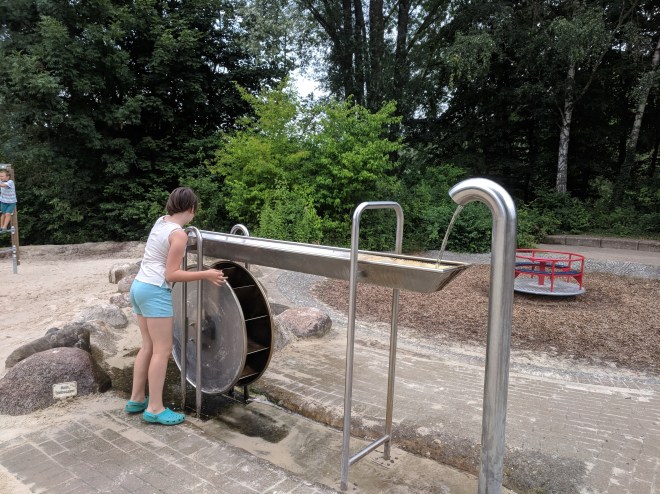
Some more water elements from various parks:
Surprise: many playgrounds had ziplines that went very fast: my kids discovered that they had to hold on pretty tight not to fly off at the very end, when the top of the zipline made a stop and the bottom made a wide and sudden swing first in the direction of the movement and then backwards. It wasn’t for the faint of heart. 🙂 Here’s a tiny video to give you an idea: https://www.youtube.com/watch?v=DNR1_bJ81_g
We also saw a few playgrounds that had ground-level trampolines–something I have never see in the US. Those were seriously jumpy.
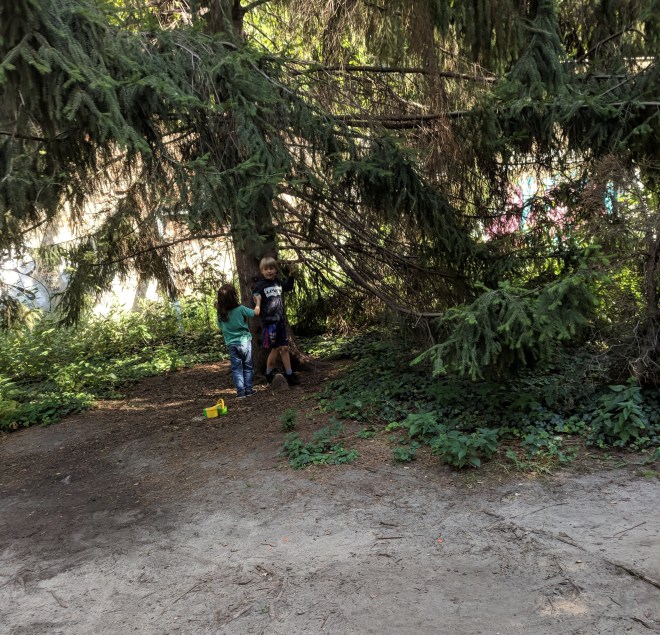
Another discovery I made was that many playgrounds were surrounded by pretty thick bushes ( as you can see on some pictures above), which were clearly used for hiding and for secret “homes”. Many of those plants were fruit trees and bushes, primarily apple and plum trees. Why don’t we have more fruit plans in the streets? I have a feeling that here in Evanston such thick plantings around playgrounds aren’t desirable because, “well, who knows what kids will do in those bushes.” I remember sitting at a community meeting a few years ago. The meeting was devoted to the future of Penny Park and a city official argued that the poor visibility of the playground structure was a serious liability. One point they made was that teenagers used the park for their “unspeakable” purposes because its construction is not see-through. I thought it was a ridiculous argument, coz life happens, you know, and really, should be happening, and not necessarily always under the watchful eye of whoever. In any case, the Germans seem to be fine with their kids hiding in the bushes and doing their secret stuff.
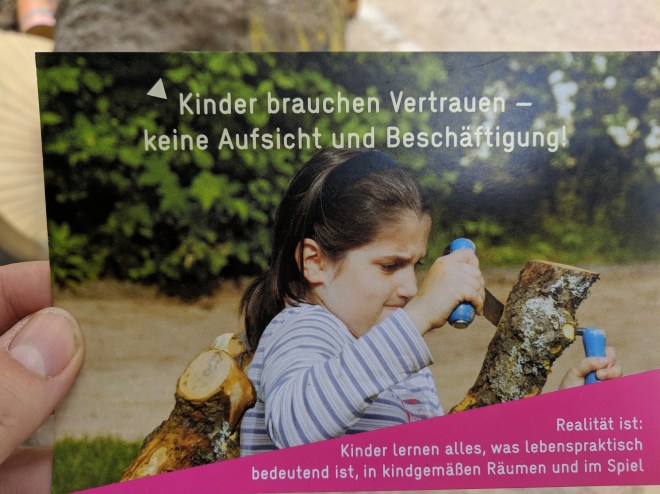
As I’m writing this, I’m reminded of a postcard I picked up at a park during a Spielwagen session (see about Spielwagen in a later post). Translated into English, the postcard says: “Children need trust–not supervision and employment! Reality is that children learn everything that is meaningful in practical life in child-friendly spaces and at play”. WOAH. I don’t know how close this is to the policies of Berlin government when it comes to children, but I saw a lot of trust in the design of the city’s parks and playgrounds.
Special little chapter: Leisepark, Berlin
I don’t know if Leisepark belongs to a common kind of German parks, but I found it very special and I didn’t see another one like that anywhere. Its name translates as Quiet Park, but I keep thinking of it as Lazy Park, because it makes you relax instantly. One way to get there is to simply turn into a gate from a regular looking Berlin street, and hop-la! you’re in a different world.
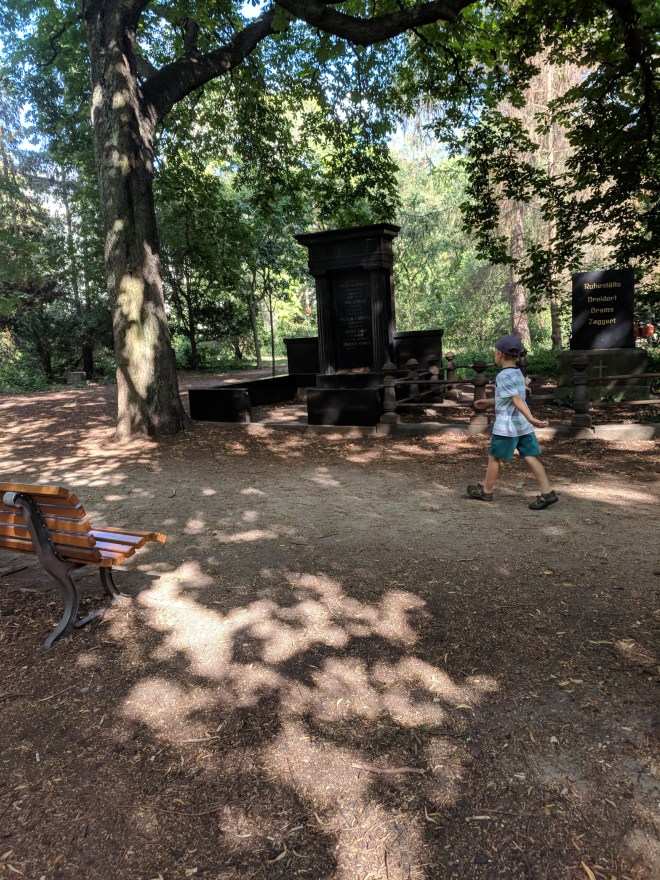
It’s a little wood in the middle of an apartment block, but you can’t see any buildings from most of the park. The wood is criss-crossed by narrow trails, and as you walk them, you come upon benches, wooden stumps arranged into simple but varied play structures, wide hammocks in shady nooks, and–here was a big surprise–tombstones.
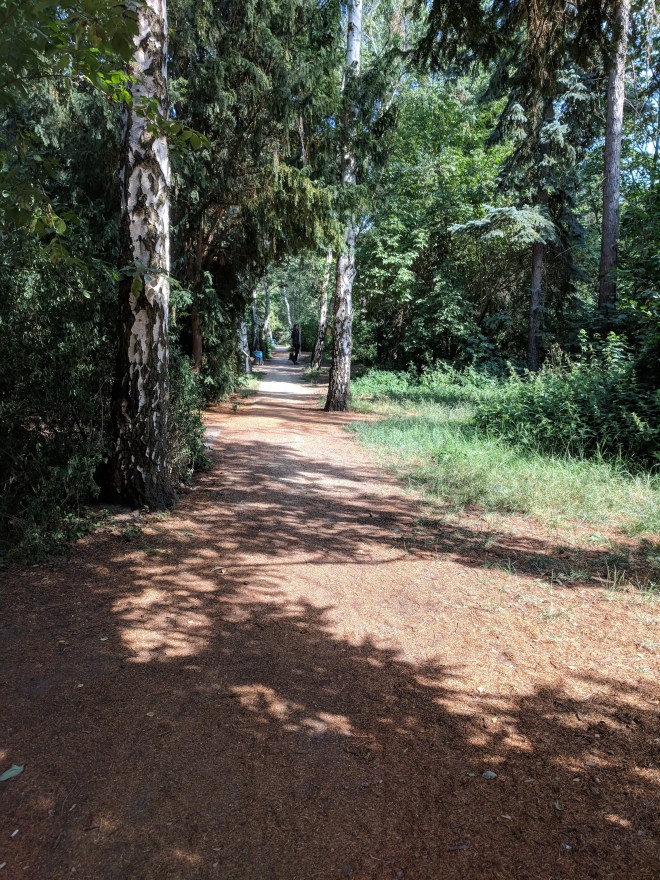
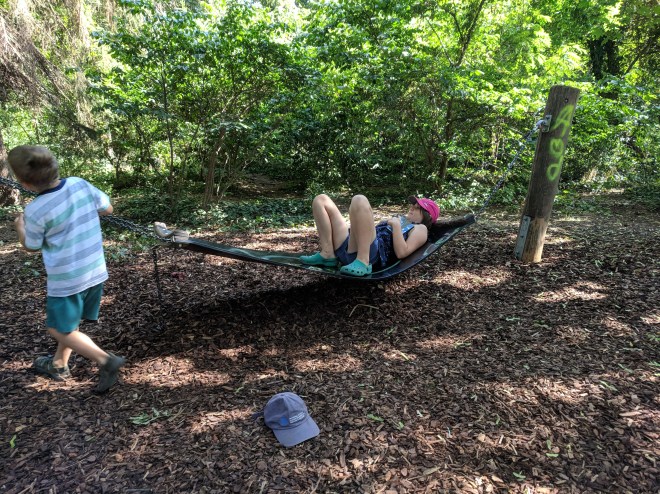
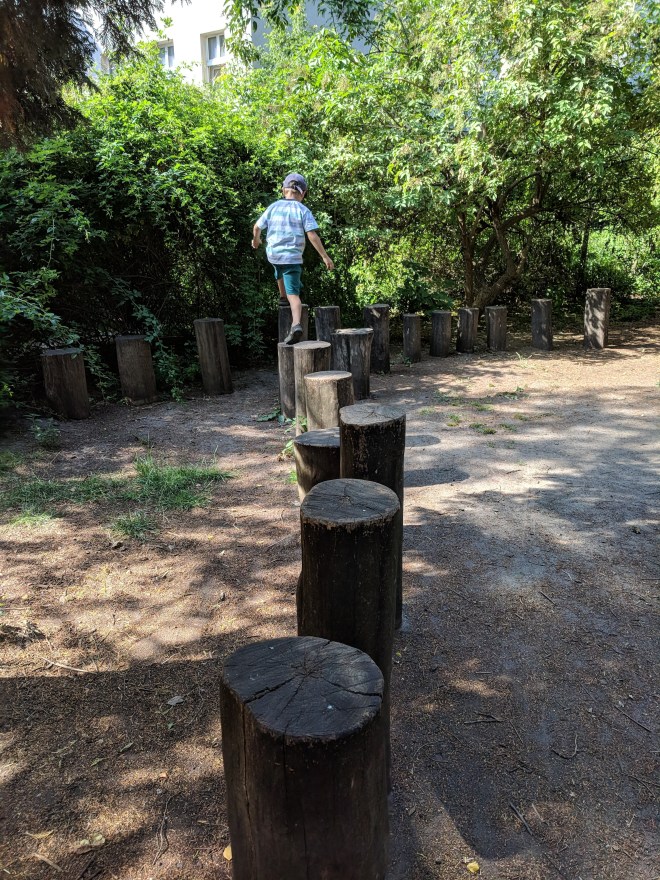
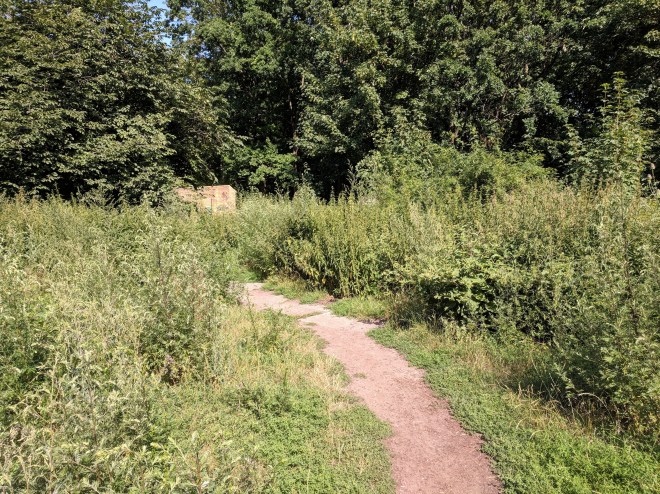
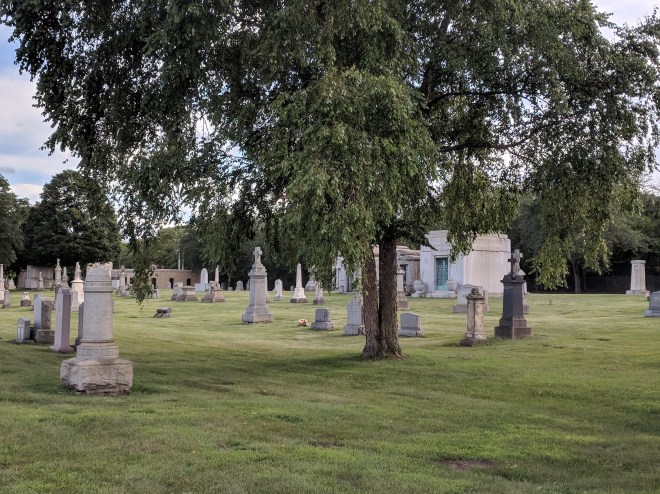
The park neighbors and kind of blends with a cemetery. I was a bit disoriented at first. Where are we? In Evanston, we live by a big cemetery, and have gone through it with kids, playing “ghost tag” along the way. I don’t think it’s common practice though, and I suspect we may get disapproving glances if we do it another time when people are there. Here’s a picture of a cemetery by our house:
In Russia, where I come from, cemeteries are definitely solemn places, places of mourning. People speak in low voices and move carefully there. Moreover, Russian cemeteries are often crowded, and there’s often very little space to walk, let alone run. Here’s a picture of a typical one:

So I was amazed that in Leisepark, play pretty much in the cemetery was actually encouraged. Take a look at these tombstones sitting in the middle of an area that could be used in many ways, including play. I wonder if kids ever climb them. If I ever have a tombstone, that’s what I want: kids climbing all over it and jumping off of it.
THE END. See post #2 about adventure playgrounds and #3 about Spielwagen.
 myplayturfdotcom